Frozen pipes: prevention and safe thawing
A frozen pipe hasn't burst yet. How you thaw it largely determines whether it does.
Free to call. We route you to an independent licensed plumber in your area — PlumbLinker does not perform plumbing work.
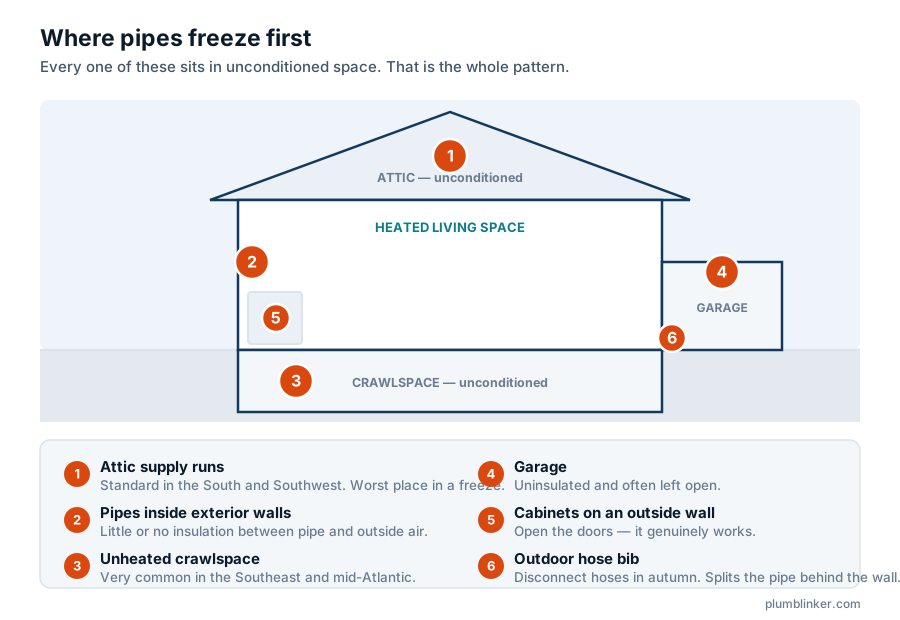
Where pipes freeze first
Preventing it
| Measure | Why it works |
|---|---|
| Let faucets drip in hard freezes | Moving water resists freezing, and an open faucet relieves the pressure that actually splits pipes. Cheapest protection available |
| Open cabinets under sinks | Lets warm room air reach pipes on exterior walls. Costs nothing |
| Keep heat at 55°F minimum, always | Including when away. Insurance often excludes freeze damage in an unheated home |
| Insulate pipes in unheated spaces | Foam sleeves are a few dollars per length |
| Disconnect garden hoses before winter | A connected hose traps water in the spigot and splits the pipe behind the wall. Extremely common and entirely avoidable |
| Seal air leaks near pipes | Rim joists, crawlspace vents, and penetrations let cold air reach pipes directly |
| Heat tape on problem runs | For pipes that freeze repeatedly. Use a UL-listed product exactly per instructions |
| Know your main shutoff | The difference between a repair and a renovation |
Homes in the South and Southwest routinely run supply lines through attics, exterior walls, and uninsulated crawlspaces, because deep freezes are rare enough not to design around. When one arrives, damage is widespread and simultaneous — and every plumber in the region is booked for days. If you live in one of those areas, dripping faucets during a freeze warning matters more for you than for anyone in Minnesota.
Thawing safely
- Open the affected faucet first — hot and cold. This relieves pressure and gives meltwater somewhere to go.
- Start heating nearest the faucet and work backward toward the frozen section. This is the part people get wrong: heating the middle first traps expanding water between two ice plugs, and that's what splits pipes.
- Use gentle heat. Hair dryer, heating pad, warm towels, or a space heater in the space. Slow and steady wins here.
- Open cabinet doors so warm air circulates around the pipes.
- Keep going after water starts moving. There may be more ice further along the run.
No blowtorch, propane torch, or kerosene heater against a pipe. It is a leading cause of structure fires during cold snaps, it can heat the pipe wall past failure, and on plastic pipe it's immediately destructive.
Watch for the split as it thaws
You often can't tell whether a frozen pipe has already cracked, because the ice is plugging its own leak. Stay with it as water returns and watch closely. If water appears anywhere it shouldn't, shut the main off immediately.
If nothing has moved after a few hours of gentle heat — or if the frozen section is inside a wall you can't reach — call. Opening a wall deliberately is much cheaper than a burst inside one.
Frequently asked questions
At what temperature do pipes freeze?
Pipes generally start to be at risk below about 20°F, though poorly insulated pipes in unheated spaces or exposed to wind can freeze closer to 32°F. Duration matters as much as the low reading.
Should I leave faucets dripping?
Yes during hard freezes, especially fixtures on exterior walls or served by pipes running through unheated space. It costs pennies and relieves the pressure that actually splits pipes.
How do I thaw a frozen pipe inside a wall?
Turn the room heat up and direct a space heater at the wall from a safe distance. Be patient. If nothing changes after a few hours, call — a controlled opening beats an uncontrolled burst.
Will a frozen pipe always burst?
No. Many thaw without damage. The split happens when expanding ice pushes water against a closed faucet and pressure builds. Opening the faucet removes that pressure, which is why it's the first step.
Plumbing emergency right now?
One call routes you to an available licensed plumber in your area. Free to call, 24 hours a day.
Call (888) 876-3092PlumbLinker is a referral service. We connect you with independent licensed plumbers — we do not perform plumbing work ourselves.